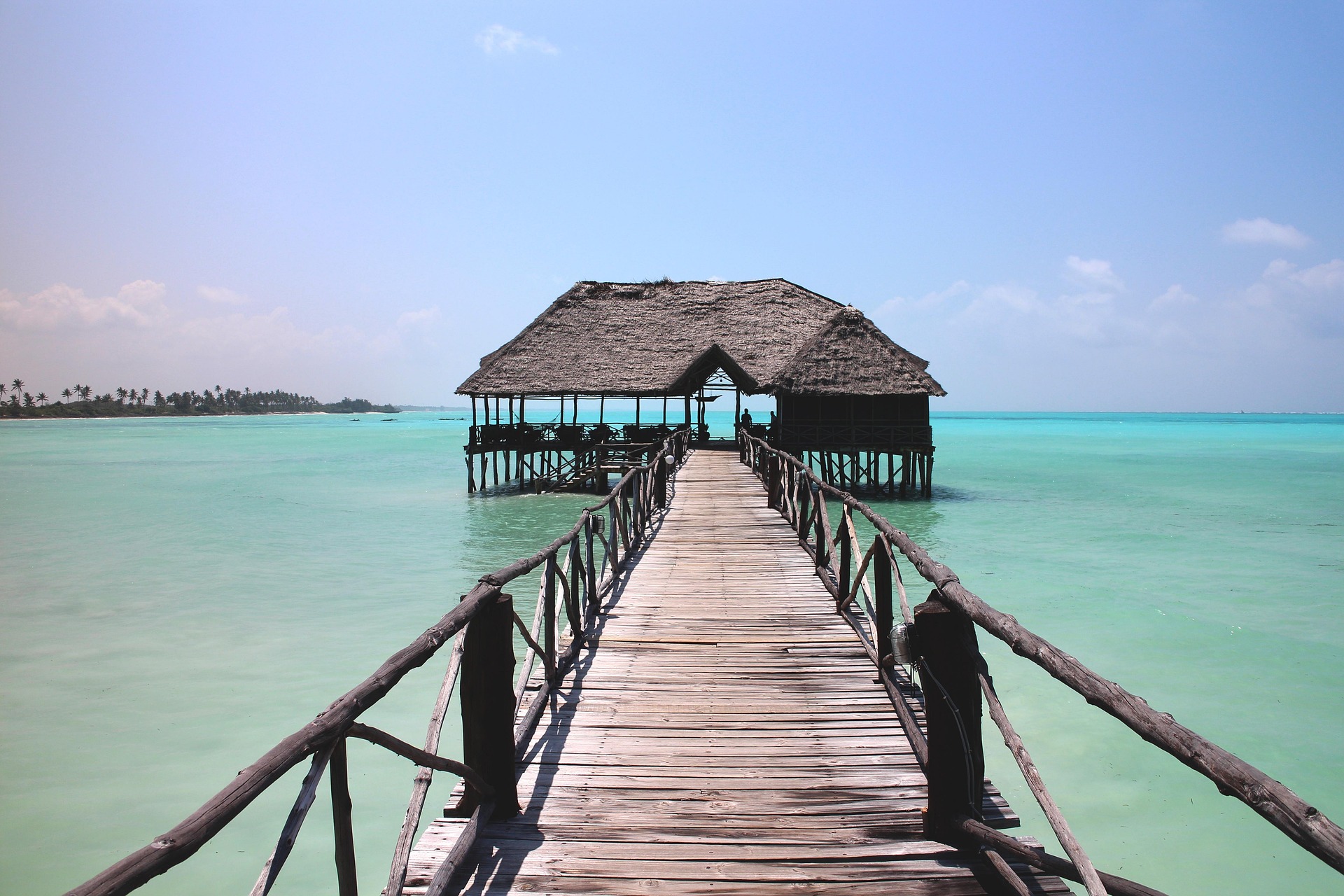
You have heard about it at every office party, every chama meeting, and every wedding reception. Someone always has a story: the white sand, the blue water that looks photoshopped, the seafood that tasted like nothing you have ever eaten. You nodded and smiled and told yourself you would go one day. That day should be this year.
Zanzibar is, without question, the most talked-about holiday destination among Kenyan travellers — and for good reason. It is just under two hours from Nairobi by plane, it does not require a visa if you carry a Kenyan passport, and it delivers the kind of holiday most people assume costs far more than it actually does. Turquoise Indian Ocean water, white sand beaches, a UNESCO World Heritage city packed with Swahili and Arab history, and seafood so fresh it was probably still swimming that morning.
This guide covers everything a Kenyan traveller needs to actually plan and book this trip: flights, ferry options, visa rules as they stand in 2026, a breakdown of the three main beach areas, a realistic 5-night budget in KES, the best time to go, and what to pack. No generic tourism copy. Just the practical information you need.
Do Kenyans Need a Visa for Zanzibar?
The short answer: No. Kenyan citizens enter Tanzania — and therefore Zanzibar — visa-free as members of the East African Community (EAC). You need only a valid Kenyan passport with at least six months remaining validity. You do not need to apply for anything in advance, pay a visa fee at the airport, or queue at a separate immigration window. You land, proceed to immigration, show your passport, and you are in.
This is one of the genuinely underappreciated advantages of the Kenyan passport. While British, American, and European travellers are busy filling in e-visa forms and paying $50 (approximately KES 6,500) at the airport, you walk past them. Make a note of that when you are on the plane and someone in the next seat is anxiously checking their documents.
Important 2026 Update: Mandatory Travel Insurance
As of late 2024, Zanzibar has introduced a mandatory inbound travel insurance policy for all foreign visitors, purchased from the Zanzibar Insurance Corporation (ZIC) at a cost of $44 per person (approximately KES 5,700). The good news: as an EAC citizen, Kenyan passport holders are currently exempt from this requirement. Confirm this remains the case before you travel, as entry rules can change. Check the Tanzania Immigration Services website (immigration.go.tz) for current EAC exemption status.tellus, luctus nec ullamcorper mattis, pulvinar dapibus leo.
Getting There: Flights from Nairobi to Zanzibar
Flying is the right choice for most Kenyan travellers going to Zanzibar. The journey from JKIA (Jomo Kenyatta International Airport) to Zanzibar’s Abeid Amani Karume International Airport takes approximately 1 hour 25 minutes to 1 hour 50 minutes depending on routing. There are currently four airlines operating this route.
Kenya Airways (KQ)
Kenya Airways operates multiple weekly flights on the NBO–ZNZ route, giving you the convenience of departing from JKIA Terminal 1A and using your Miles & More or Flying Blue points. KQ is the most reliable option if you value departure time certainty and a full-service cabin experience.
Round-trip economy fares on Kenya Airways currently range from approximately KES 45,000 to KES 65,000 depending on how far in advance you book. Prices during August and December (peak season) can push above KES 70,000 round trip.
Precision Air (PW)
Precision Air is a Tanzanian carrier that operates the Nairobi–Zanzibar route at lower base fares than Kenya Airways. Expect round-trip fares from KES 26,000 to KES 42,000 when booked 4–6 weeks in advance. The trade-off is slightly less legroom and a smaller aircraft, but the flight is under two hours — comfort matters less on a short hop like this.
Precision Air flights from Nairobi typically connect through Dar es Salaam before reaching Zanzibar, adding about 30–45 minutes to your travel time. If a direct flight and departure time flexibility matter to you, KQ or Flightlink may suit you better.
Flightlink
Flightlink is a Tanzanian charter and scheduled carrier that has been consistently offering some of the lowest fares on this route. Round-trip fares can come in as low as KES 22,000 to KES 34,000 when booked early. The airline’s service is no-frills, but if your priority is keeping the flight cost low so you have more budget for the beach, Flightlink is worth checking.
Air Tanzania
Air Tanzania operates this route via Dar es Salaam and offers competitive fares. It is a solid option, particularly if you can find promotions through their website. Fares are broadly similar to Precision Air.
The Smart Booking Window
Here is the pattern that consistently delivers the best fares on this route: book 5–7 weeks in advance and target mid-week departures (Tuesday, Wednesday) and Saturday returns. The most expensive time to book is less than two weeks before departure, during school holidays in August, and around Christmas/New Year.
The Ferry from Mombasa: Is It Worth It?
There is a romanticised idea among some travellers of taking the boat from Mombasa to Zanzibar — hopping across the Indian Ocean like the old dhow traders. Let’s be honest about what that journey actually involves.
There is no direct passenger ferry service between Mombasa and Zanzibar. The ferry option that exists is the Azam Marine service between Dar es Salaam and Zanzibar — a 1 hour 45 minute crossing. To use it from Kenya, you would need to take the SGR train or drive from Nairobi to Mombasa, then travel by bus or another train another 5+ hours south to Dar es Salaam, then take the ferry. You are looking at a total journey time of 14–18 hours with multiple transfers, border crossings, and the inherent unpredictability of surface transport in East Africa.
Compare that to a 1 hour 45 minute flight from Nairobi, and the decision makes itself.
Stone Town is the capital of Zanzibar and a UNESCO World Heritage Site. It is where you will likely land and, depending on your itinerary, spend your first day before heading to the beach. Most travellers find that one full day in Stone Town is sufficient to absorb its highlights, though two days gives you more breathing room.
The old city is a maze of narrow alleyways — genuinely, you will get lost, and that is entirely the point. The architecture is an extraordinary blend of Swahili, Arab, Indian, and Portuguese influence: intricately carved wooden doors, coral stone buildings, minarets, and occasional echoes of the colonial British period.
Morning: The Slave Market and Anglican Cathedral
Start your Stone Town morning at the former Slave Market and Anglican Cathedral, built on the site where one of East Africa’s largest slave markets once operated. It is sobering and important. The underground holding cells where enslaved people were kept before being sold are still intact and accessible. Budget about 90 minutes here — it is not a comfortable visit, but it is a necessary one. Entry fee is approximately $5 (KES 650).
Midday: Darajani Market and Forodhani Gardens
From the cathedral, walk to Darajani Market — the main covered market where you will find fresh produce, spices, fabrics, and an authentic snapshot of everyday Zanzibar life. Eat lunch here; the cost is very low compared to tourist restaurants. Then head toward the waterfront and Forodhani Gardens, Zanzibar’s famous night market that also has daytime activity. The grilled skewers, fresh sugar cane juice, and Zanzibar pizza (a local street food entirely unlike Italian pizza) are not to be missed.
Afternoon: The Old Fort and Freddie Mercury Museum
The Old Fort (Ngome Kongwe) is free to enter and sits right on the waterfront. It hosts occasional craft markets inside its walls. From there, walk to the Freddie Mercury Museum — a genuinely interesting stop for any music fan, and surprisingly moving given the scale of his global fame compared to how modest his Zanzibar connection is. Freddie Mercury was born in Stone Town in 1946. The museum is small and the admission is minimal.
Evening: Rooftop Sundowner
End your Stone Town day on a rooftop watching the sun drop into the Indian Ocean. Emerson on Hurumzi’s Tea House is the standout option — you sit on floor cushions Swahili-style, with 360-degree views over minarets and the sea. Book in advance; it fills up. If you cannot get a reservation, The Africa House Hotel’s Sunset Bar is a strong alternative with a colonial balcony overlooking the harbour.
Who Should Consider the Ferry Route
The Mombasa–Dar–Zanzibar surface route makes sense only if you are already planning to spend time on the Kenya coast and want to continue your journey southward through Tanzania, eventually reaching Zanzibar as part of a longer East Africa road or rail trip. As a standalone Zanzibar holiday strategy from Nairobi, the ferry adds significant time and complexity with minimal benefit.
Choosing Your Beach: Nungwi vs Kendwa vs Paje
This is the decision that will most define your Zanzibar experience. The three main beach areas attract very different kinds of travellers, and choosing the wrong one for your style can leave you disappointed. Here is an honest comparison.
| BEACH | BEST FOR | TIDES | VIBES | PRICE LEVEL |
|---|---|---|---|---|
| Nungwi | First-timers, divers, nightlife | Minimal — swim any time | Lively, social, energetic | Mid to High |
| Kendwa | Couples, honeymooners, quiet luxury | Minimal — swim any time | Relaxed, romantic, resort-forward | Mid to High |
| Paje | Budget travellers, kitesurfers, young groups | Significant — check tide times | Boho-chic, youthful, independent | Budget to Mid |
Nungwi — The Social Hub
Nungwi sits at the northern tip of Zanzibar and is the island’s most energetic beach area. Crucially, the tides at Nungwi are minimal, meaning you can walk into the water at any hour without checking a tide chart. This makes it particularly good for families and first-time visitors who want to swim whenever the mood strikes.
The water is that famous neon turquoise that looks so photoshopped on Instagram that you will genuinely be surprised when you see it in real life. There is a dhow-building yard on the beach where craftsmen still build wooden boats using traditional methods — it is a remarkable sight right next to beach bars.
Accommodation budget guide for Nungwi:
- Budget: KES 4,000–7,000/night for guesthouses like Green’s Nungwi
- Mid-range: KES 15,000–26,000/night for boutique beachfront hotels
- Luxury: KES 35,000–65,000+/night for premium resorts
Kendwa — The Romantic Escape
Kendwa is 15–20 minutes’ walk from Nungwi along the beach and feels like a completely different world. It is quieter, more resort-forward, and consistently recommended for couples and honeymooners. Like Nungwi, it has minimal tide variation so swimming is possible throughout the day.
The reason most people choose Kendwa over Nungwi for romance is the sunset. Kendwa faces west, and the sunsets are spectacular. Many resorts time their sundowners and dinners around the nightly sky show. If you saw a Zanzibar sunset image that made you book this trip, it was probably taken at Kendwa.
There is a Full Moon Party at Kendwa beach most months — a large outdoor event with DJs and dancing that draws visitors from across the island. Worth planning around if that sounds appealing, or worth avoiding if you prefer silence.
Paje — The Budget-Friendly Eastside Alternative
Paje sits on the southeast coast and is a completely different character from the northern beaches. It is Zanzibar’s kitesurfing capital — if you want to learn to kitesurf, this is where you come. The beach is beautiful and dramatic, with wide white sand and strong consistent winds.
The catch is the tides. Paje sits on a shallow shelf, and at low tide the water can recede a kilometre or more, leaving you walking on wet sand rather than swimming. You need to check the tide times and plan swims around high tide. This is not a dealbreaker if you know about it in advance.
The upside? Paje is significantly cheaper than the north coast. Budget guesthouses and eco-lodges start from KES 2,500–4,000 per night. The area attracts a younger, more independent crowd — backpackers, digital nomads, and adventurous couples who are not interested in resort experiences.
Paje is about 45–60 minutes by car from Stone Town, compared to Nungwi and Kendwa which are about 1.5 hours. If you want the shorter transfer from the airport, Paje wins.
Best Time to Visit Zanzibar from Kenya
Zanzibar has two distinct weather patterns that every Kenyan traveller needs to understand before booking.
| MONTH(S) | SEASON | WHAT TO EXPECT | VERDICT |
|---|---|---|---|
| January–February | Hot Dry | Sunny, hot (30°C+), excellent diving & snorkelling | ✅ Great — book early |
| March–early April | Pre-rains | Hot, increasing humidity, still mostly dry | 🟡 Decent but transitional |
| April–May | Long Rains | Heavy daily rain, some lodges close | ❌ Avoid unless budget hunting |
| June–October | Cool Dry | Best weather: clear skies, warm sea, low humidity | ✅ Peak — best overall |
| November | Short Rains | Light showers (often at night), good deals | 🟡 Fine, some rain |
| December | Festive Peak | Hot, busy, expensive — Christmas/New Year crowds | ✅ Festive but pricey |
The sweet spot for Kenyan travellers: June to October. This is when Zanzibar is at its best — clear skies, comfortable temperatures, calm seas perfect for snorkelling and diving, and no rain. It also aligns beautifully with the Great Migration season in the Masai Mara and Serengeti, which is why many visitors combine a Kenya safari with a Zanzibar beach extension in July, August, or September.
December is the other popular window — it aligns with the Kenyan school holiday and is great for families — but expect higher prices and larger crowds. Book accommodation at least 3 months in advance for December travel.
5-Night Zanzibar Budget Breakdown in KES (2026)
Below are three honest budget tiers for a 5-night Zanzibar trip from Nairobi for one person, including flights. These are planning estimates based on current prices — actual costs depend on when you book, which beach area you choose, and how you eat and drink.
| COST | BUDGET TRAVELLER (KSH) | MID-RANGE (KSH) | COMFORTABLE (KSH) |
|---|---|---|---|
| Return flight (NBO–ZNZ) | 22,000–34,000 | 45,000–55,000 | 55,000–70,000 |
| Accommodation (5 nights) | 12,500–20,000 | 55,000–90,000 | 100,000–200,000+ |
| Food & drink (5 days) | 7,000–12,000 | 18,000–30,000 | 35,000–65,000 |
| Activities & day trips | 6,000–10,000 | 15,000–25,000 | 25,000–50,000 |
| Local transport | 3,000–5,000 | 6,000–10,000 | 12,000–20,000 |
| Airport transfers | 2,000–3,500 | 4,000–6,500 | 7,000–12,000 |
| TOTAL (per person) | KES 52,500–84,500 | KES 143,000–216,500 | KES 234,000–417,000 |
Budget tier (KES 52,500–84,500): You are flying Flightlink or Precision Air, staying in a Paje guesthouse or Stone Town hostel, eating from local restaurants and the Forodhani night market, and doing one or two shared group activities (snorkelling day trip, Prison Island). This is a real, achievable Zanzibar trip.
Mid-range tier (KES 143,000–216,500): You are flying Kenya Airways or Precision Air with an early booking deal, staying in a beachfront boutique hotel in Nungwi or Kendwa, eating at a mix of local and tourist restaurants, and doing the safari Blue tour plus a spice farm and Stone Town half-day.
Comfortable tier (KES 234,000–417,000): You are in a quality resort in Nungwi or Kendwa, flying KQ, eating at resort restaurants and nice seafood places, and booking private activities. This is still significantly cheaper than an equivalent quality experience in the Maldives.
Money Matters: What to Bring
Zanzibar operates on US dollars at hotels and tour operators, and Tanzanian Shillings (TZS) for local markets and street food. You will always get a better price paying TZS at the Forodhani market or in village shops. ATMs in Stone Town and Nungwi dispense TZS. Card payments attract a 3–5% surcharge at most establishments. Carry more USD cash than you think you need — ideally crisp, undamaged notes printed after 2009.
Safari + Zanzibar: The Classic East Africa Combo
This is the trip that most Kenyans dream about and surprisingly few actually take. A Kenya safari followed by a Zanzibar beach extension is considered one of the finest holiday combinations in the world — and from Nairobi, you are better positioned to pull it off than almost anyone else on earth.
A typical 7–10 day itinerary looks like this: 3–4 nights on safari in the Masai Mara or Amboseli, then fly directly to Zanzibar from Wilson Airport or JKIA for 4–5 nights of beach time. The contrast is extraordinary — from dust, savannah, and big cats to turquoise water and spice-scented air. It is two completely different experiences that somehow feel like they belong together.
The July–October window is when this combo shines brightest. The Great Migration river crossings are happening in the Mara, and Zanzibar is in its best weather period. If you can take 10–14 days off work, this is the trip to plan.
If you would like help planning a Kenya safari plus Zanzibar extension as a combined itinerary — whether for you and a partner, a group, or a family — our team at Kenya Travel Hub can build a custom package. See our travel services → [link to https://kenyatravelhub.com/our-services/]
What to Bring: The Practical Packing Guide
You are going to an Indian Ocean island with a strong Muslim majority. That combination shapes what you should and should not pack.
The Essentials
- Reef-safe sunscreen only — regular sunscreen damages coral reefs. This is important and increasingly enforced at marine parks.
- Light linen or cotton clothing — humidity is high and you will want breathable fabrics
- A light cover-up (scarf or long shirt) for entering Stone Town mosques or conservative areas
- Good sandals and one pair of walking shoes for Stone Town’s cobblestones
- A small dry bag for water activities
- USD cash — carry a reasonable amount in used, non-crisp bills (post-2009). Many places do not take cards or add a surcharge
- Your Kenyan national ID or passport — your passport is your visa, carry it everywhere
Leave at Home
- Drone — drones require a permit in Tanzania and are confiscated at the airport if undeclared
- Camouflage clothing of any kind — it is illegal to wear camouflage in Tanzania
- Plastic carrier bags — Tanzania has banned them; carry a reusable bag
Frequently Asked Questions
The following questions come from Kenyan travellers planning their first Zanzibar trip. They are also formatted as a FAQ section for your website’s schema markup.
Do Kenyan citizens need a visa for Zanzibar?
No. Kenyan citizens are members of the East African Community (EAC) and enter Tanzania, including Zanzibar, without a visa for stays of up to 90 days. You need only a valid Kenyan passport with at least six months remaining before expiry. No application, no fee, no queue at the visa counter.
How long is the flight from Nairobi to Zanzibar?
The direct flight takes approximately 1 hour 25 minutes to 1 hour 50 minutes. Kenya Airways and Flightlink offer the most direct routing. Precision Air and Air Tanzania flights typically route via Dar es Salaam and add 30–45 minutes. Compare routes when booking to decide what works best for your schedule.
Is Zanzibar expensive for Kenyan travellers?
It depends on how you travel. Budget travellers spending KES 52,000–85,000 for a 5-night trip (including flights) can have a genuinely good experience staying in guesthouses and eating local food. Mid-range travellers spending KES 145,000–220,000 get beachfront accommodation and a comfortable experience. The island can also be very expensive if you stay at top-end resorts, but that is a choice, not a requirement.
What is the best beach in Zanzibar for first-time visitors?
Nungwi is the most practical choice for first-time visitors. It has minimal tides (you can swim any time of day without consulting a chart), a wide range of accommodation at different price points, easy access to boat trips and water sports, and a lively atmosphere. Kendwa is better for couples seeking something quieter and more romantic. Paje is the best choice for budget travellers and kitesurfers.
When is the cheapest time to fly to Zanzibar from Kenya?
The cheapest flight fares are generally available in May and November, which fall during or near Zanzibar’s rainy seasons. For the best combination of value and good weather, book for June or September — these months offer fair prices before the July–August peak, with excellent weather conditions.
Can I use M-Pesa to pay for things in Zanzibar?
Not directly. Tanzania uses M-Pesa Tanzania, which is a separate service from Safaricom M-Pesa. Your Kenyan M-Pesa account does not work at Tanzanian vendors. Carry USD cash for hotels and tour operators, and exchange some into Tanzanian Shillings (TZS) for local markets, restaurants, and transport. Some hotels accept Visa and Mastercard, though a 3–5% surcharge often applies.
