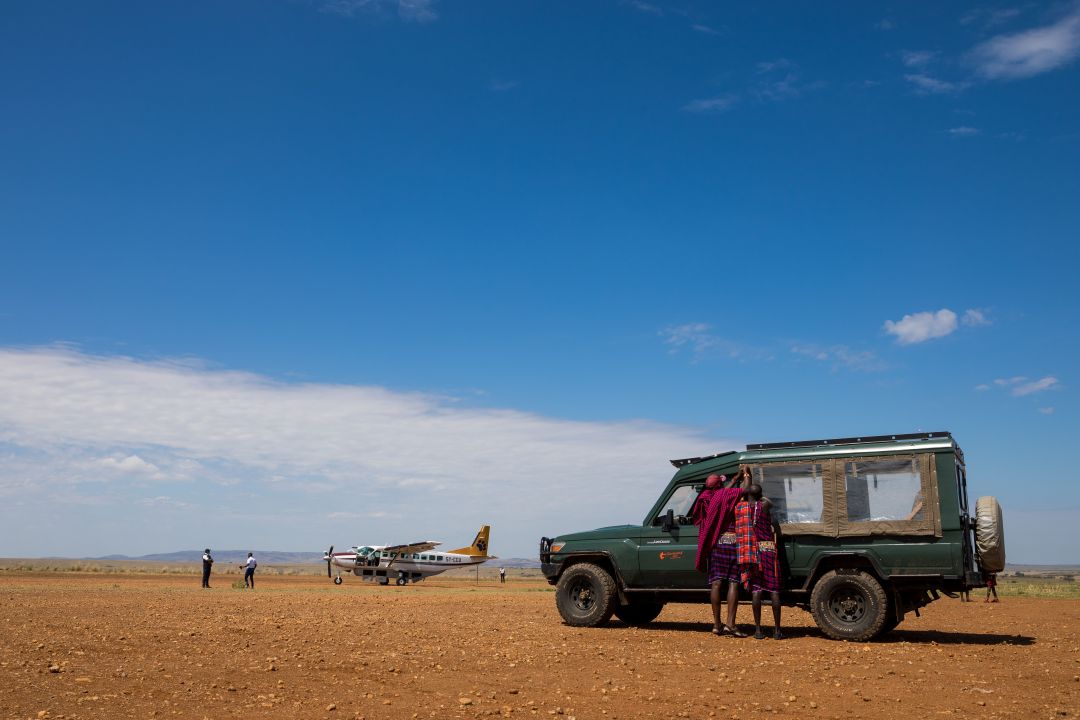
Quick answer: There is no single Maasai Mara airport. The Mara is served by about a dozen gravel airstrips spread across the national reserve and the private conservancies around it. Scheduled bush flights leave Wilson Airport in Nairobi several times a day. The flight takes 45 to 75 minutes, depending on how many strips the plane stops at. A one-way seat costs roughly USD 180 to 260, which is about KES 23,000 to 34,000. You do not pick the airstrip. Your camp does.
I have booked hundreds of fly-in safaris over the years. The same questions come up every time. Which strip do I land at? Is 15 kg really the limit? Is flying worth the money? This guide answers all of them, with real numbers for both Kenyan residents and international visitors.
Masai Mara Flights at a Glance
Currency Note
KES figures use a rate of about KES 129 to the US dollar. Airlines and the county price in their own currency, so the exact shilling amount moves with the exchange rate.
| ITEM | DETAILS |
|---|---|
| Main departure airport | Wilson Airport (WIL), Nairobi, off Lang'ata Road |
| Other departure points | Mombasa and Diani (Mombasa Air Safari), plus bush-to-bush connections |
| Flight time | 45 minutes direct; up to 75 minutes with stops |
| Main airstrips | Keekorok, Ol Kiombo, Musiara, Mara Serena, Kichwa Tembo, plus conservancy strips |
| Scheduled airlines | Safarilink, Airkenya Express, Mombasa Air Safari |
| One-way fare | USD 180–260 (about KES 23,000–34,000) |
| Baggage limit | 15 kg per person, hand luggage included, soft bag only |
| Private charter | About USD 1,000–2,500 one way for the whole plane |
Is There an Airport in Masai Mara?
No. The Masai Mara has no commercial airport. What it has is a network of all-weather airstrips. Most are gravel or murram runways cut into the grassland. There is no terminal building, no check-in desk and no shop. At the bigger strips you might find a small shelter and a toilet. That is it.
When people search for “Maasai Mara airports”, they mean these strips. Each one has an IATA code, so you will see codes like KEU or OLX on your ticket. The planes are small. Expect a single-engine Cessna Caravan or a larger twin-engine Dash 8. Your guide parks next to the runway and waits for you. Very often, your first game drive starts the moment you step off the plane.
The Main Airstrips in Masai Mara
Here are the airstrips you are most likely to see on a booking. The camps listed are examples, not full lists. Always confirm the strip with your lodge before you book a flight.
| AIRSTRIP | CODE | LOCATION | CAMPS SERVED |
|---|---|---|---|
| Keekorok | KEU | South-east, main reserve | Keekorok Lodge, Sarova Mara Game Camp, Mara Sopa, Ashnil Mara |
| Ol Kiombo | OLX | Central reserve, near Talek | Mara Intrepids, Fig Tree Camp, Basecamp Masai Mara |
| Musiara | MDR | North-west, near Musiara Marsh | Governors' camps and Mara River camps |
| Mara Serena | MRE | Mara Triangle (west) | Mara Serena Safari Lodge |
| Kichwa Tembo | KTJ | North-west, near Oloololo Gate | Kichwa Tembo, Bateleur, Kilima Camp, Mpata |
| Angama | ANA | South-west, Oloololo escarpment | Angama Mara |
| Mara North | HKR | Mara North Conservancy | Elephant Pepper Camp, Mara Siria |
| Olare Orok | OLG | Olare Motorogi Conservancy | Camps in Olare Motorogi |
| Ol Seki | OSJ | Naboisho Conservancy (east) | Camps in Naboisho |
| Ngerende | – | North-east, outside reserve | Ngerende Island Lodge, Fairmont Mara Safari Club |
| Siana | – | Siana Conservancy, near Sekenani | Siana area camps |
Keekorok Airstrip (KEU)
Keekorok is the oldest and best-known strip in the Mara. It sits in the south-east of the main reserve, near Keekorok Lodge. This is where the main road from Sekenani meets the tracks heading south. It suits camps on the southern plains and the Sand River side. In migration season, herds often arrive from Tanzania through this area first.
Ol Kiombo Airstrip (OLX)
Ol Kiombo is in the centre of the reserve, close to the Talek River. Many mid-range camps around Talek use it. The central Mara is strong big cat country, so you can see lions on the short drive to camp. If you are on a budget fly-in package, there is a good chance you will land here or at Keekorok.
Musiara Airstrip (MDR)
Musiara serves the north-west of the reserve, near the Musiara Marsh and the Mara River. The Governors’ camps are the classic users. This is one of the best strips for migration river crossings between July and October. The marsh area is also famous for its resident lion prides.
Mara Serena Airstrip (MRE)
Mara Serena sits in the Mara Triangle, west of the Mara River. The Triangle is managed separately by the Mara Conservancy. It tends to have fewer vehicles than the eastern side. Note that some operators limit how many passengers they carry on takeoff from this strip. That can affect group bookings, so ask early.
Kichwa Tembo Airstrip (KTJ)
Kichwa Tembo is at the northern tip of the Triangle side, just outside Oloololo Gate. It sits below the Oloololo escarpment. Camps here include Kichwa Tembo, Bateleur and Kilima Camp. Guests usually drive into the Triangle for game drives.
Conservancy Airstrips: Mara North, Olare Orok, Ol Seki, Ngerende and Siana
The private conservancies around the reserve have their own strips. Mara North serves the Mara North Conservancy. Olare Orok serves Olare Motorogi. Ol Seki serves Naboisho. Ngerende and Siana serve camps in the north-east and east. These areas cap vehicle numbers, allow night drives and walking safaris, and feel far quieter. Some camps also have private strips used only by charters.
Angama Airstrip (ANA)
Angama is in the south-west, on the escarpment above the Mara Triangle. It mainly serves Angama Mara. Guests here get the escarpment views and drive down into the Triangle for game viewing.
Which Masai Mara Airstrip Should You Fly Into?
Fly into the strip your camp tells you to use. That is the honest answer. Each camp has one strip it uses most, and the camp sends a vehicle there. If you book the wrong strip, you could face a two-hour drive and an extra transfer charge.
If you have not picked a camp yet, choose the area first. Use this table.
| IF YOU WANT... | STAY IN THESE AREAS | LIKELY AIRSTRIP |
|---|---|---|
| River crossings (July–October) | North-west reserve, Mara Triangle, Mara North | Musiara, Mara Serena, Kichwa Tembo, Mara North |
| Big cats in the central plains | Talek and central reserve | Ol Kiombo |
| Southern plains, early migration | South-east reserve | Keekorok |
| Fewer vehicles, night drives, walks | Private conservancies | Olare Orok, Ol Seki, Mara North, Siana |
| Escarpment views | Oloololo escarpment | Angama, Kichwa Tembo |
One more thing. Scheduled flights work like a bus route. The plane may land at two or three strips before yours. People call this the “milk run”. If your strip is the last stop, a 45-minute flight can become 75 minutes. Ask the airline for the order of stops if timing matters to you.
Fee tip from experience
Landing at a strip inside the reserve (Keekorok, Ol Kiombo, Musiara, Mara Serena) means you pay reserve or Triangle entry fees for each day you are inside. Conservancy camps charge conservancy fees instead, and these are usually built into the nightly rate. Check which applies before you compare camp prices.
Which Airlines Fly to Maasai Mara Airports?
Three scheduled airlines cover the Mara. All of them fly small aircraft and sell seats on fixed daily schedules.
| AIRLINE | DEPARTS FROM | MARA STRIPS SERVED | WORTH KNOWING |
|---|---|---|---|
| Safarilink | Wilson Airport, Nairobi | All main reserve and most conservancy strips | Morning, midday and afternoon departures; tiered fares from promo to premium |
| Airkenya Express | Wilson Airport, Nairobi | Main reserve and key conservancy strips | Daily scheduled flights; often slightly cheaper on main reserve strips |
| Mombasa Air Safari | Mombasa, Diani and Nairobi | Keekorok, Mara North, Kichwa Tembo, Musiara, Mara Serena, Ol Seki | Best option for beach-and-safari trips from the coast |
| Private charter | Wilson or any strip | Any strip, including private camp strips | Leaves on your schedule; good value for groups of four or more |
Schedules change by season. In 2026, Safarilink’s published Mara timetable showed departures from Wilson at 07:30, 10:00, 14:15 and 16:00. Treat those as a guide and confirm on the airline website when you book. The early flight gets you to camp in time for a late-morning drive. The afternoon flight lands in time for the evening drive.
How Much Does It Cost to Fly to Masai Mara?
A scheduled one-way seat from Nairobi costs about USD 180 to 260 per adult. A return trip costs about USD 350 to 500. Prices rise in the July to October migration season and over Christmas. They drop in the April and May long rains.
| COST ITEM | USD | KES (approx.) |
|---|---|---|
| Scheduled flight, one way, per adult | 180–260 | 23,000–34,000 |
| Scheduled flight, return, per adult | 350–500 | 45,000–65,000 |
| Return flights for a couple | 700–1,000 | 90,000–129,000 |
| Private charter, one way, whole aircraft | 1,000–2,500 | 129,000–323,000 |
| Airstrip to camp transfer | Usually included by the camp | Usually included |
For Kenyan residents: Book directly with the airline and book early. Safarilink, for example, runs a tiered system where promo fares sell first and premium fares come last. A seat booked two months ahead can cost far less than the same seat booked two days ahead. Pay in shillings to avoid card conversion charges.
For international visitors: Most lodges can add flights to your package. This is often easier than booking separately, because the camp then owns the transfer. If a flight is delayed, the camp knows and waits.
Masai Mara Entry Fees to Budget For
Flights are only part of the cost. Narok County charges daily entry fees for the main reserve. The Mara Triangle follows a similar seasonal structure.
| VISITOR CATEGORY | January–June | July–December |
|---|---|---|
| Non-resident adult | USD 100 per day | USD 200 per day |
| Non-resident child (9–17 years) | USD 50 per day | USD 50 per day |
| Kenyan citizen adult | KES 3,000 per day | KES 3,000 per day |
| Narok County resident adult | KES 2,000 per day | KES 2,000 per day |
Should You Fly or Drive to the Masai Mara?
Fly if your trip is three nights or shorter, or if your camp is deep in a conservancy. Drive if you are a group of four or more on a tight budget, or if you want to see the Rift Valley on the way. Here is how the two compare.
| FACTOR | Flying | Driving |
|---|---|---|
| Time from Nairobi | 45–75 minutes | 5–7 hours, depending on gate and road |
| Cost for two people | USD 700–1,000 return in flights | Shared vehicle cost, usually far lower |
| Cost for four people | Scheduled seats or a charter at similar cost | Often the cheaper option |
| Luggage | 15 kg each, soft bag | No strict limit |
| Game drive on arrival | Yes, often straight from the strip | Usually only from the afternoon |
| Best for | Short trips, conservancies, comfort | Groups, budget trips, road-trip lovers |
A useful middle option is to drive in and fly out. You see the landscape on the way in. You save a long, tiring drive on the way home.
Baggage Rules for Masai Mara Flights
The limit is 15 kg per person, and that includes your hand luggage, camera and laptop. Bags must be soft. Hard suitcases do not fit in the small cargo pods. Safarilink’s maximum bag size is 90 x 65 x 35 cm.
- Use a soft duffel bag with no wheels or rigid frame.
- Weigh your bag at home. Do not guess.
- Leave extra luggage at Wilson. Safarilink offers free storage at its Wilson terminal for passengers flying on to the bush.
- Most camps offer laundry. You need fewer clothes than you think.
- If you carry heavy camera gear, ask the airline about buying an extra seat for it.
Airlines can refuse or charge for overweight bags, and on a full plane there may be no room at all. Take the limit seriously.
Wilson Airport: What to Know Before You Fly
Wilson Airport is Nairobi’s domestic and light aircraft hub. It is off Lang’ata Road, south-west of the city centre. It is not the same as Jomo Kenyatta International Airport (JKIA). The two are about 18 km apart.
- Check in at least one hour before departure.
- If you land at JKIA the same day, allow plenty of time for the transfer. Nairobi traffic is unpredictable.
- International visitors connecting straight from a long-haul flight should aim for the late-morning or afternoon Mara departure. Better still, sleep one night in Nairobi.
- Kenyan travellers need a national ID. Foreign visitors need their passport.
- Each airline has its own terminal building at Wilson. Tell your driver which airline you are flying.
What Happens When You Land
The plane lands on a dirt runway in open country. Your guide waits beside the strip with a safari vehicle. The pilot hands out bags straight from the cargo pod. There is no baggage hall. If your strip is a stopover for others, the plane leaves again within minutes.
On the way out, your guide drops you at the strip shortly before your flight. Flights can arrive a little early or late. Stay with your guide until the plane is on the ground. During the rains, especially April, May and November, wet runways can cause delays or diversions to another strip. Keep a buffer on your departure day if you have an international connection.
Flying Between the Mara and Other Destinations
You do not have to go back to Nairobi between parks. Bush airlines link the Mara with other safari areas through connections. Mombasa Air Safari links the Mara to the coast, which suits a classic safari-and-beach trip. Cross-border connections to the Serengeti have run seasonally through Migori and Tarime, with a short road transfer at the Isebania border. Ask your airline or tour operator whether these are running for your dates.
For park fees, the best time to visit and where to stay, read our full guide to the [INTERNAL LINK: Masai Mara article].
Frequently Asked Questions
What is the main airport in Maasai Mara?
There is no main airport. Keekorok and Ol Kiombo are the busiest strips in the main reserve. Musiara and Mara Serena are busy in migration season. The right one depends on your camp.
How long is the flight from Nairobi to Masai Mara?
About 45 minutes direct from Wilson Airport. With stops at other strips, it can take up to 75 minutes.
How much is a flight to Masai Mara?
A scheduled one-way seat costs about USD 180 to 260, or KES 23,000 to 34,000. A return trip costs about USD 350 to 500. A private charter costs about USD 1,000 to 2,500 one way for the whole plane.
Which airstrip is closest to the Mara River crossings?
Musiara, Mara Serena, Kichwa Tembo and Mara North are the closest to the main crossing points. Crossings usually happen between July and October.
Can I fly to the Masai Mara from Mombasa or Diani?
Yes. Mombasa Air Safari flies from the coast to several Mara airstrips. Seat numbers are limited, so book early in high season.
Can I take a suitcase on a Masai Mara flight?
No hard suitcases. Use a soft bag. The total limit is 15 kg per person, including hand luggage.
