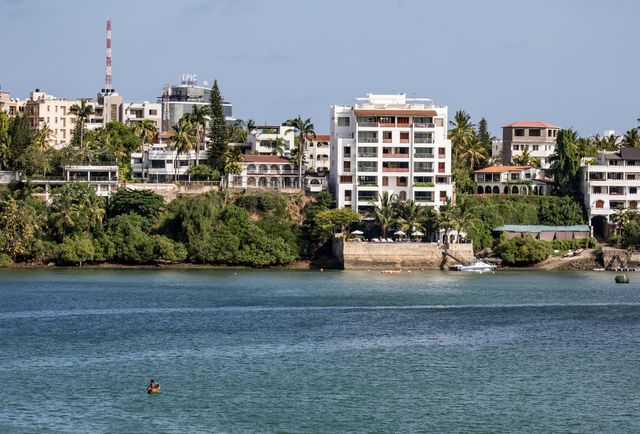
The plan sounds straightforward enough: load the car Friday afternoon, hit the highway, arrive in Mombasa for dinner. Every Kenyan who has tried this knows how that story can end — engine idling in a queue somewhere between Mlolongo and Sultan Hamud as the sun sets and the dinner reservation becomes tomorrow’s breakfast.
The Nairobi–Mombasa road is one of Kenya’s most driven routes and also one of its most reliably underestimated. The distance is approximately 485–490 km. The realistic drive time is 7.5 to 8.5 hours on a normal day — not the six hours that optimists quote. On a bad Friday, it can be twelve. The difference between a good trip and a bad one is almost entirely about when you leave and what you know before you go.
This guide covers everything: the actual numbers, the SGR comparison with current 2026 fares, the specific stops that are worth making, the fuel cost calculated at live EPRA prices, the honest safety picture on the highway right now, where to stop if you split the journey overnight, and what to do if your car develops a problem somewhere between Voi and Mariakani.
The Route: Distance, Time and Road Reality
The A109/A104 from Nairobi to Mombasa covers approximately 485–490 km of single carriageway — one lane each direction for virtually the entire route. It passes through Athi River, Sultan Hamud, Makindu, Kibwezi, Mtito Andei, Voi, Maungu, and Mariakani before crossing onto Mombasa Island via the Makupa Causeway.
The road surface is generally good tarmac. What makes it hard is not potholes — it is heavy freight trucks hauling cargo from Mombasa Port to Nairobi and inland. Hundreds of trucks use this route daily, and their behaviour — slow overtaking speeds, sudden stops, brake failures on inclines, and overloading — accounts for most of the congestion and a significant share of accidents. The Voi–Mtito Andei section is the documented black spot: two serious accidents occurred on that stretch in August 2026 alone, including six fatalities in a bus-trailer head-on collision near Manyatta on August 20, 2026.
Realistic Driving Times
| Departure Scenario | Expected Drive Time | What Causes It |
|---|---|---|
| Very early morning (5:00–6:00 AM), midweek | 6.5–7.5 hours | Minimal traffic, clear road. Best case. |
| Normal morning, 2 short stops | 7.5–8.5 hours | Typical for most drivers. Allow this. |
| Friday afternoon (4–8 PM Nairobi exit) | 10–14+ hours | City exit gridlock + freight traffic. Documented. |
| Post-accident gridlock (any day) | Up to 16 hours | Single-lane blocked both ways; happened Aug 2026. |
Plan for 8 hours minimum on any trip. Book accommodation that does not depend on a specific arrival time.
SGR vs Road Trip: The 2026 Comparison
The Madaraka Express runs daily between Nairobi Terminus (Syokimau) and Mombasa Terminus (Miritini) on three services: 08:00, 15:00, and 22:00 departures. Journey time is approximately 5–6 hours depending on service type. Current 2026 fares, confirmed from Kenya Railways (krc.co.ke) and verified by paybillke.com in September 2026:
| SGR Class | One-Way Fare (KES) | Key Features |
|---|---|---|
| Economy | KES 1,500 | Reserved numbered seats, shared carriage, snack trolley available |
| First Class | KES 4,500 | Reserved seats, quieter carriage, complimentary refreshments on selected runs |
| Premium | KES 12,000 | Reclining rotating seats, meals, Wi-Fi, entertainment — Nairobi–Mombasa only |
Book at metickets.krc.co.ke or the KRC app. Pay via M-Pesa (Paybill 809888) — cards are not accepted. Book at least a week ahead during festive seasons; the 22:00 night train sells out on long weekends.
When the SGR Wins
- Solo or couple travel — no car needed at the coast
- Friday afternoon travel — the train is immune to road gridlock
- Long weekend departures — certainty of arrival time is worth more than flexibility
- You want to arrive rested, not behind the wheel for 9 hours
When the Road Trip Wins
- Group of 4–6 — per-person fuel cost splits well below KES 1,500
- You need a car at the coast — mobility around Mombasa, Diani, or the North Coast
- You want to stop at Tsavo, see the baboons at Mtito Andei, or break the journey with a game drive
- You are carrying gear, luggage, or items that would incur excess baggage fees on the train
- You are carrying gear, luggage, or items that would incur excess baggage fees on the train
- Midweek travel when roads are clear
💡 The Hybrid Strategy Many Kenyans Now Use
Take the SGR down to avoid Friday traffic. Hire a car in Mombasa or arrange a hotel transfer for coastal mobility. Drive back from Mombasa on Monday or Tuesday when Sunday return gridlock has cleared — and you arrive home having done neither leg under traffic pressure.
When to Drive: The One Decision That Changes Everything
The quality of your Nairobi–Mombasa road experience is determined almost entirely by when you leave Nairobi. Nothing else you do has as much impact.
The Friday Evening Problem
Friday afternoon on the Mombasa Road is among Kenya’s most consistent traffic disasters. As Nairobi empties for the weekend, the exit corridor through South B, Mlolongo, and Athi River becomes severely congested even before trucks join the flow. This is not an occasional bad day — it is a reliable weekly pattern. Documented incidents include motorists spending nights in their vehicles near Sultan Hamud and Voi after accidents blocked both lanes.
| Departure Scenario | Recommended Timing | Why |
|---|---|---|
| Friday coast trip | Leave by 5:00–5:30 AM | Beat city exit traffic entirely. Arrive coast by early afternoon. |
| Friday alternative | Leave after 10:00 PM | Night drive risk (see safety section). Avoids gridlock. |
| Saturday departure | Leave by 6:00 AM | Roads clear. Best overall timing for a relaxed drive. |
| Midweek (Mon–Thu) | Leave by 6:00–7:00 AM | Easiest option. Least traffic. Most reliable timing. |
| Return to Nairobi (Sunday) | Leave Mombasa by 5:00 AM OR after 8:00 PM | Sunday afternoon queues near Voi are severe. |
| Long weekend / public holiday | Thursday evening OR very early Friday | Triple the normal Friday volume. Plan accordingly. |
Fuel Costs at Current October 2026 EPRA Prices
EPRA confirmed prices for the September 15 – October 14, 2026 cycle, unchanged for three consecutive months:
| City | Super Petrol (KES/litre) | Diesel (KES/litre) |
|---|---|---|
| Nairobi | KES 214.03 | KES 217.86 |
| Mombasa | KES 210.87 | KES 214.58 |
Fill up fully in Nairobi before departing — Mombasa prices are slightly cheaper, so top up there for the return trip.
Fuel Cost Calculator for the 485 km Route
| Vehicle Type | Consumption | Litres (one-way) | Cost One-Way (KES) | Cost Return (KES) |
|---|---|---|---|---|
| Small saloon (1.3L petrol) | 8–9 L/100 km | 39–44 L | KES 8,350–9,420 | KES 16,700–18,840 |
| Mid-size sedan (1.8–2.0L) | 10–12 L/100 km | 49–58 L | KES 10,490–12,410 | KES 20,980–24,820 |
| Large SUV / 4WD (2.5–3.0L) | 13–16 L/100 km | 63–78 L | KES 13,480–16,690 | KES 26,960–33,380 |
| Diesel pickup (2.5L diesel) | 10–13 L/100 km | 49–63 L | KES 10,670–13,720 | KES 21,340–27,440 |
A group of four sharing a mid-size car pays approximately KES 5,000–6,200 per person for the full return trip in fuel — competitive with two Economy SGR tickets (KES 3,000 return) once you factor in the coast mobility advantage of having your own car.
⛽ Fuelling the Route
Fill fully in Nairobi before departure. Nairobi prices are consistent.
Next reliable stop: Sultan Hamud (km 110) — multiple stations, good facilities.
Mtito Andei (km 240) — must stop for fuel if running below half. The Kibwezi–Voi stretch is long and isolated.
Voi (km 330) — full services. Top up for Mariakani and Mombasa.
Mombasa prices are KES 3.16/litre cheaper than Nairobi — fill up here for the return.
The Must-Stop Points
The highway has specific stops that are worth planning around — not because you must, but because the experience, the fuel logistics, and the safety picture make them the natural rhythm of the drive.
Sultan Hamud — km 110 (~90 minutes from Nairobi)
The first real town after Athi River. Good choice for your first fuel and food break — it is early enough that you have not let your tank drop dangerously, and the facilities are solid. Petrol stations, roadside restaurants, clean toilets.
On a clear morning, stop for 10 minutes and look south-west. On a good day you will see Kilimanjaro on the horizon from here — 80 km away in Tanzania but enormous against the sky. Most drivers miss this entirely because they are looking at the road. It costs nothing and it is worth it.
Mtito Andei — km 240 (Halfway)
The psychological midpoint of the drive and arguably its most memorable stop. Mtito Andei sits between Tsavo East and Tsavo West national parks, and the town has grown up entirely around the highway. There is a Shell station that is almost always operational, food, and a supermarket.
The town is famous for its olive baboon population. Troops of 20–40 animals treat the fuel station and roadside as their personal territory. They are bold, clever, and occasionally aggressive with food. Do not feed them. Do not leave windows open if there is food visible. Keep children close. This is a wildlife interaction, not a zoo visit — the baboons are wild animals with entirely their own agenda.
Tsavo detour option: The Chyulu Gate for Tsavo West is accessible from Mtito Andei. If you have 2–3 extra hours and a capable vehicle, a short game drive is possible — and at Kenyan resident rates, the entry is significantly cheaper than non-resident pricing. Only attempt this if you have confirmed the gate is open and have sufficient time to exit before dark.
Voi — km 330 (2.5 hours from Mombasa)
Voi is a proper town — Nakumatt (now rebranded), multiple fuel stations, ATMs, hospital, and several accommodation options. It sits at the entrance to Tsavo East National Park, Kenya’s largest park, which is easily self-driven unlike the Masai Mara. If a game drive is part of your trip, Voi is where you divert in.
If you are splitting the journey overnight, Voi is the ideal stop — far enough along to make the next morning’s drive under 3 hours, with enough town infrastructure for a comfortable night. Afrika Lodges and Oasis Hotel are the consistently recommended options. Voi Wildlife Lodge sits on the park boundary and is worth it for the atmosphere if the budget allows.
Mariakani — km 430 (Last Stop Before Mombasa)
The final significant stop before entering the Mombasa approach corridor. Fuel here if you need it — slightly cheaper than Mombasa city stations and you avoid the queue at Mombasa itself. From Mariakani the road narrows and slows as you enter the Kilifi–Mombasa corridor. The Mazeras descent and the Mombasa approach are documented accident zones — reduce speed and stay alert. Follow the signs for either the Makupa Causeway (Mombasa Island/CBD) or the bypass to the South Coast.
Your Safety on This Highway
The Nairobi–Mombasa highway has a documented accident record that deserves honesty, not reassurance. Two separate fatal crashes occurred on the Voi–Mtito Andei section in August 2026 alone: six people killed in a bus-trailer head-on at Manyatta on August 20, and a wheat truck plunging off a bridge near Voi on August 27. In 2025, motorists spent hours in vehicles after a complete blockage between Mutitu and Voi. This is the road you are driving.
Night Driving: The Specific Risks
People sometimes consider driving overnight to avoid daytime traffic. Night driving on the Nairobi–Mombasa highway is significantly more dangerous than daytime driving, and the risks are specific:
- Elephants crossing the road: Between Bachuma Gate and Mtito Andei, the highway passes through Tsavo wildlife corridors. Elephants, which are dark grey to black at night, cross the road regularly. A Tahmeed bus hit an elephant near Maungu in a documented 2025 incident. The KWS Senior Warden has publicly described the Bachuma Gate–Mtito Andei section as a black spot for vehicle-wildlife accidents. At 100 km/h, you have no stopping distance.
- Overloaded trucks: Most long-distance freight travels overnight to avoid daytime inspection points. Hundreds of trucks are on this road in both directions from 10:00 PM to 5:00 AM. Overtaking a truck on a dark single carriageway is extremely dangerous.
- Unlit pedestrians and cyclists: Roadside communities use the highway at all hours. People in dark clothing walking on the tarmac edge are invisible at night until your headlights are already on them.
- Your own fatigue: A 22:00 departure from Nairobi means you reach Mombasa at 4:00–5:00 AM after 6+ hours of night driving. Most humans are neurologically impaired at this point regardless of how alert they feel.
The verdict: If you must travel at night, take the SGR 22:00 service (arrives Mombasa 03:35). If you must drive at night, do not do it alone. Do not drive the Bachuma–Mtito Andei section at night unless you are experienced on this specific route, fully rested, and genuinely have no alternative. If you have children in the vehicle, do not drive this section at night. This is not overly cautious advice — it is the advice the KWS Senior Warden gives publicly.
🚨 Safety Non-Negotiables for This Drive
Check your spare tyre, jack, and wheel brace before departure — not when you need them in Tsavo.
Carry 4+ litres of water per person in the vehicle.
Save your insurance emergency number before you leave Nairobi, not when you are broken down.
Do not overtake on crests or bends. The overtaking impatience that kills people on this road is always in a hurry.
Tell someone your route and expected arrival time.
Download offline Google Maps for the Voi–Mtito Andei section — mobile signal is poor.
If Your Car Breaks Down
Breakdowns on this route are more common than most drivers plan for — the heat, the distance, and the load on the vehicle all contribute. If something goes wrong:
Immediate Steps
- Hazards on immediately — before you do anything else. A stationary vehicle on a fast highway without hazards is invisible to following traffic.
- Move completely off the tarmac — the shoulder is narrow. Get onto the dirt verge as far as possible. Never stay in a live lane.
- Place warning triangles at least 50 metres behind the vehicle. Carry two minimum — most Kenyans carry none.
- Stay on the passenger side of the vehicle, away from traffic. On the Tsavo section at night, do not exit into bush.
Who to Call
- AA Kenya: +254 722 254 353 / +254 703 082 888. Kenya’s principal roadside assistance organisation with highway breakdown response. AA membership includes towing.
- Your car insurance: Most comprehensive policies include roadside assistance and towing — save the number in your phone before the trip, not after the breakdown.
- Kenya Police Emergency: 999 or 112. For a breakdown in the Tsavo section at night, informing police of your location is important.
- Nearest garage: Mtito Andei, Voi, and Mariakani all have mechanics and towing services. The petrol station attendant at your nearest stop can make a referral.
Pre-Trip Vehicle Checklist
| Item | Check |
|---|---|
| Spare tyre, jack, and wheel brace | Accessible and functional — not buried under luggage |
| Tyre pressure (all 4 + spare) | Correct for load |
| Engine oil and coolant | Full — check morning before departure |
| Brakes | If soft or squealing in Nairobi, fix before going |
| Fuel tank | Leave Nairobi full |
| Warning triangles (×2) | In the boot, accessible |
| First aid kit | Stocked and accessible |
| Offline maps downloaded | For Voi–Mariakani section |
Where to Sleep: Breaking the Journey
Splitting the drive across two days removes time pressure and eliminates the fatigue and night driving risks entirely. Two stops make practical sense:
Mtito Andei Area — km 220–240 (Halfway)
Kombo Cottage at Nyika Eco Cottages in Mtito Andei is the most-recommended stop for travellers specifically splitting this journey — solar power, swimming pool, hot water, Wi-Fi, 4.75 stars from 150+ Airbnb reviews, and built exactly for Nairobi–Mombasa overnight stops. From here, the next morning’s drive to Mombasa is under 4 hours. A 6:00 AM departure has you at the coast by 10:00 AM.
Voi — km 330 (2.5 hours from Mombasa)
Better-serviced and closer to Mombasa. Afrika Lodges in central Voi is the consistent budget recommendation — clean, affordable, free parking, reliable. Voi Wildlife Lodge on the Tsavo East boundary is the atmospheric choice — game viewing from the lodge, elephants at the waterhole, and a morning drive into the park before continuing to Mombasa. From Voi, a 7:00 AM departure means coffee at the coast before noon.
Frequently Asked Questions
How long does it take to drive from Nairobi to Mombasa?
Allow 7.5 to 8.5 hours for a realistic midweek drive with two short stops. Under ideal conditions with a very early morning departure, 6.5–7 hours is possible. On a Friday afternoon departure, add 2–6 hours of Nairobi exit congestion before you even reach the open highway. The worst documented snarl-ups — triggered by a single accident blocking both lanes — have trapped motorists for 12–16 hours between Voi and Nairobi. The best strategy: leave before 6:00 AM any day you drive.
How much does fuel cost for the Nairobi to Mombasa road trip?
At current EPRA prices (October 2026: KES 214.03/litre super petrol in Nairobi), the one-way fuel cost runs approximately KES 8,350 for a small saloon to KES 16,690 for a large SUV. For a return trip in a mid-size car, budget KES 20,000–25,000 in fuel. Divided among four passengers, the round trip costs approximately KES 5,000–6,200 per person — similar to the SGR economy return fare, but with a car available at the destination.
Is the SGR or road trip better from Nairobi to Mombasa?
The SGR (KES 1,500 economy, KES 4,500 first class one-way) is better for solo and couple travellers, Friday departures, and anyone who does not need a car at the coast. It is faster (5–6 hours), more reliable, and immune to road gridlock. The road trip is better for groups of 4+ who need coastal mobility, anyone wanting to stop at Tsavo, and midweek travellers. The hybrid strategy — SGR down on Friday, self-drive back on Monday — is increasingly popular and avoids the worst of both directions’ traffic.
Is it safe to drive Nairobi to Mombasa at night?
Night driving on this route carries significantly higher risk than daytime driving and is not recommended for most drivers. The Bachuma Gate–Mtito Andei section passes through Tsavo wildlife corridors where elephants cross the road at night — documented incidents include fatal vehicle-elephant collisions. Overloaded freight trucks travel this route at night in both directions. If overnight travel is necessary, the SGR 22:00 service from Nairobi (arriving Mombasa 03:35) is the safer option. If you must drive overnight, do not drive the Tsavo section alone, stay below 80 km/h, and have a rested co-driver.
Where should I stop on the Nairobi to Mombasa drive?
Three stops are worth planning: Sultan Hamud (km 110) for your first fuel and food break, plus Kilimanjaro views on clear mornings; Mtito Andei (km 240) for the halfway fuel stop, the famous baboon colony, and Tsavo West gate access; and Voi (km 330) for a town with full facilities, ATMs, Tsavo East access, and good accommodation options if you are sleeping over. Mariakani (km 430) is useful for a final fuel stop before Mombasa’s busier stations.
Arriving at the Coast? Read This Next. Whether you are heading to Diani, the North Coast, or just settling into Mombasa, our Diani Beach Complete Guide covers getting there from the mainland, water sports prices in KES, accommodation options, and the one thing most Kenyans miss on their first Diani visit. 👉 Read the Diani Beach Guide → kenyatravelhub.com/diani-beach-complete-guide-everything-a-kenyan-needs-to-know-before-visiting/ Planning a Tsavo diversion? Our Kenya Safari Guide has resident fee breakdowns and park-by-park guides: kenyatravelhub.com/safari-guide/ |
